




How to improve the measurement accuracy of outside micrometers?
 Sep 09, 2025|
 In the field of precision measurement, outside micrometers play a crucial role in ensuring the quality and accuracy of various manufacturing processes. As a trusted outside micrometers supplier, I understand the significance of measurement accuracy and the challenges that users may face. In this blog, I will share some practical tips on how to improve the measurement accuracy of outside micrometers.
Understanding the Basics of Outside Micrometers
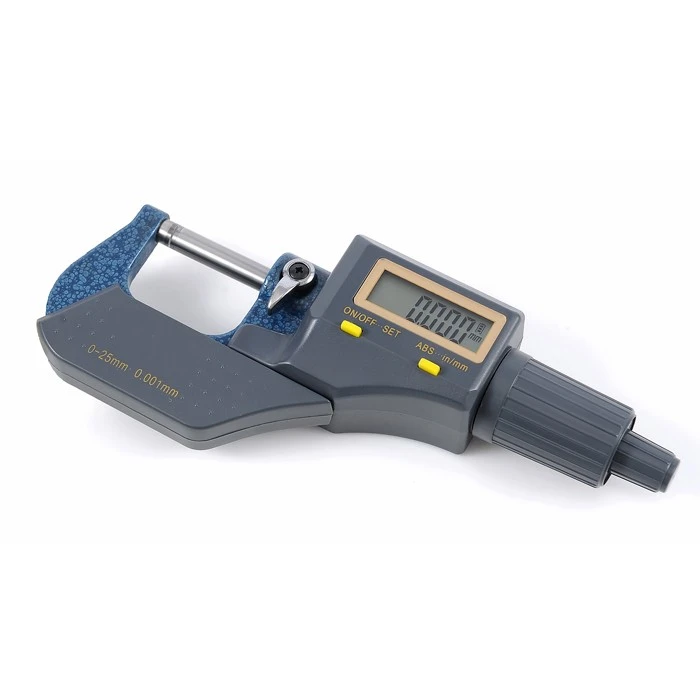
Before delving into the methods of improving measurement accuracy, it is essential to have a solid understanding of outside micrometers. Outside micrometers are precision measuring instruments used to measure the external dimensions of objects with high accuracy. They consist of a frame, an anvil, a spindle, a thimble, and a locknut. The anvil is fixed, while the spindle moves towards the anvil when the thimble is rotated. The measurement is read from the scale on the sleeve and the thimble.
There are different types of outside micrometers available in the market, each with its own features and applications. For example, the Vernier Outside Micrometer uses a vernier scale to provide more precise readings, while the Digimatic Outside Micrometer displays the measurement digitally for easier reading. The Micrometer with Interchangeable Anvils allows for greater flexibility in measuring different shapes and sizes of objects.

Proper Handling and Maintenance
One of the key factors affecting the measurement accuracy of outside micrometers is proper handling and maintenance. Here are some important points to keep in mind:
- Cleanliness: Before and after each use, make sure to clean the measuring faces of the anvil and the spindle with a clean, dry cloth. Any dirt, debris, or oil on the measuring faces can affect the accuracy of the measurement.
- Storage: Store the outside micrometer in a protective case when not in use to prevent damage. Avoid exposing the micrometer to extreme temperatures, humidity, or vibrations, as these can also affect its accuracy.
- Calibration: Regular calibration is essential to ensure the accuracy of the outside micrometer. It is recommended to calibrate the micrometer at least once a year or more frequently if it is used frequently or in critical applications. Calibration should be performed by a qualified technician using a traceable standard.
- Handling: When using the outside micrometer, hold it gently and avoid applying excessive force. The measuring faces should be in contact with the object being measured without any gaps or pressure points. Make sure to align the micrometer properly with the object to avoid parallax errors.
Correct Measurement Technique
In addition to proper handling and maintenance, using the correct measurement technique is also crucial for improving the measurement accuracy of outside micrometers. Here are some tips:
- Zeroing: Before taking a measurement, make sure to zero the outside micrometer. This can be done by closing the measuring faces together and checking if the zero on the thimble aligns with the zero on the sleeve. If not, adjust the zero adjustment screw until the zeroes align.
- Single Measurement: When taking a measurement, make sure to take it at the correct location on the object. For example, if you are measuring the diameter of a cylindrical object, make sure to measure it at the center of the object. Avoid measuring at the edges or corners, as these may not represent the true diameter of the object.
- Multiple Measurements: To improve the accuracy of the measurement, it is recommended to take multiple measurements at different locations on the object and then calculate the average. This can help to reduce the effects of any variations or irregularities in the object.
- Reading the Measurement: When reading the measurement, make sure to read it at eye level to avoid parallax errors. The measurement should be read from the scale on the sleeve and the thimble. The sleeve scale provides the main measurement, while the thimble scale provides the fractional part of the measurement.
Environmental Factors
Environmental factors can also have a significant impact on the measurement accuracy of outside micrometers. Here are some important factors to consider:
- Temperature: Temperature can affect the dimensions of the object being measured as well as the outside micrometer itself. As the temperature changes, the object may expand or contract, which can affect the measurement accuracy. It is recommended to take measurements at a constant temperature or to compensate for the temperature effects using a temperature correction factor.
- Humidity: Humidity can also affect the measurement accuracy of outside micrometers. High humidity can cause corrosion or rust on the measuring faces, which can affect their accuracy. It is recommended to store the micrometer in a dry environment and to avoid using it in humid conditions.
- Vibrations: Vibrations can cause the outside micrometer to move or shake, which can affect the measurement accuracy. It is recommended to use the micrometer on a stable surface and to avoid any sources of vibrations.
Training and Education
Finally, providing training and education to the users of outside micrometers is essential for improving the measurement accuracy. Here are some important points to cover in the training:
- Function and Operation: The users should be trained on the function and operation of the outside micrometer, including how to zero it, take a measurement, and read the measurement.
- Proper Handling and Maintenance: The users should also be trained on the proper handling and maintenance of the outside micrometer, including how to clean it, store it, and calibrate it.
- Measurement Technique: The users should be trained on the correct measurement technique, including how to take a single measurement, multiple measurements, and how to avoid parallax errors.
- Environmental Factors: The users should be educated on the environmental factors that can affect the measurement accuracy of outside micrometers and how to compensate for them.
Conclusion
Improving the measurement accuracy of outside micrometers is essential for ensuring the quality and accuracy of various manufacturing processes. By following the tips and techniques outlined in this blog, you can significantly improve the measurement accuracy of your outside micrometers. Remember to handle and maintain the micrometer properly, use the correct measurement technique, consider the environmental factors, and provide training and education to the users. If you have any questions or need further assistance, please do not hesitate to contact us. We are a leading outside micrometers supplier and are committed to providing our customers with high-quality products and services. We look forward to discussing your specific requirements and helping you find the best solution for your measurement needs.
References
- ISO 3611:2010, Geometrical product specifications (GPS) -- Dimensional measuring equipment -- Design and metrological characteristics of micrometers
- ASME B89.1.13-2013, Specification for Micrometers