




How to read the main scale on a Long Vernier Caliper?
 May 30, 2025|
 Hey there! If you're new to using a long vernier caliper or just looking to brush up on your skills, learning how to read the main scale is a crucial first step. As a long vernier caliper supplier, I've seen firsthand how important it is for users to have a solid understanding of this process. In this blog post, I'll break it down for you in a simple and straightforward way.
Understanding the Main Scale Basics
The main scale on a long vernier caliper is like the ruler part of the tool. It gives you the basic measurement information. Usually, the main scale is marked with major and minor divisions. The major divisions are the bigger markings, and they tell you the whole number part of the measurement. For example, if you're measuring something in millimeters, the major divisions might be labeled with numbers like 10, 20, 30, and so on.
The minor divisions are the smaller markings between the major ones. These help you get a more precise measurement. On a typical vernier caliper, the minor divisions represent smaller increments, like 0.5 mm or 1 mm, depending on the caliper.
Identifying the Main Scale Units
Before you start reading the main scale, it's important to know what units of measurement it's using. Most vernier calipers use either millimeters (mm) or inches (in). This information is usually clearly marked on the caliper itself. If it says "mm" on the scale, then you're measuring in millimeters. If it says "in", you're measuring in inches.
Let's say you've got a caliper marked in millimeters. When you look at the main scale, the numbers represent whole millimeters. The space between two consecutive whole numbers is divided into smaller parts, which we'll talk more about in a minute.

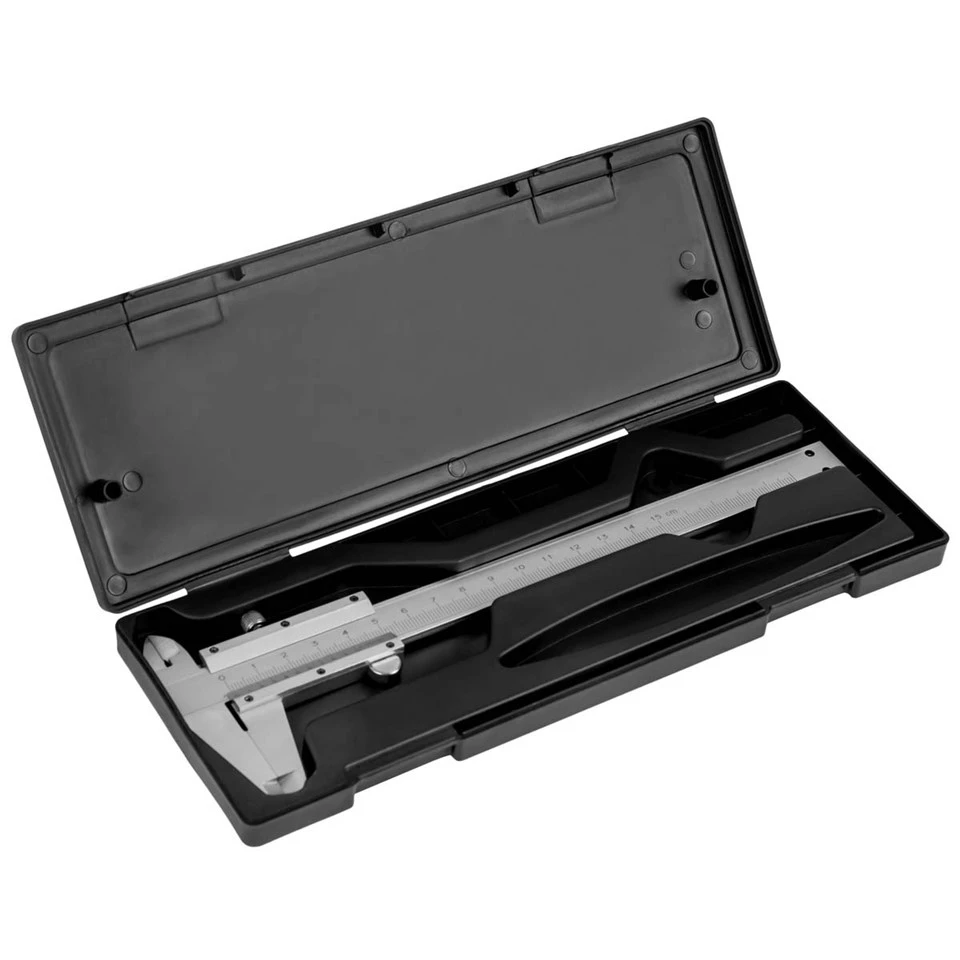
Reading the Whole Number Part
To read the whole number part of the measurement on the main scale, find the major division that is closest to but less than the zero mark on the vernier scale. This major division gives you the whole number value.
For instance, if the zero mark on the vernier scale lines up just past the 20 mm mark on the main scale, then the whole number part of your measurement is 20 mm. It's like looking at a regular ruler and seeing which whole number is just before the point you're measuring.
Reading the Fractional Part
Once you've got the whole number part, it's time to figure out the fractional part of the measurement. This is where the minor divisions on the main scale come in handy.
Let's say the minor divisions on your caliper represent 0.5 mm each. If the zero mark on the vernier scale falls between the 20 mm and 21 mm marks on the main scale, and it's past the first minor division after the 20 mm mark, then you've got an additional 0.5 mm. So far, your measurement is 20.5 mm.
But what if it's past more than one minor division? Well, you just count how many minor divisions it's past the nearest whole number and multiply that by the value of each minor division. For example, if it's past two minor divisions after the 20 mm mark and each minor division is 0.5 mm, then you add 2 x 0.5 mm = 1 mm to the 20 mm. So your measurement becomes 21 mm.
Combining the Whole and Fractional Parts
Now that you've got the whole number part and the fractional part of the measurement from the main scale, you just need to combine them. It's as simple as adding the two values together.
Let's go back to our example. If the whole number part is 20 mm and the fractional part is 1 mm, then the total measurement on the main scale is 20 + 1 = 21 mm.
Using Different Types of Vernier Calipers
There are different types of vernier calipers out there, and each might have a slightly different look or way of reading. For example, a Vernier Caliper with Fine Adjustment allows for more precise positioning, which can make reading the main scale even easier. It has a fine adjustment screw that lets you move the caliper jaws in small, controlled increments.
Another type is the Vernier Caliper 0 - 150mm. This caliper has a range of 0 to 150 mm, which is suitable for many common measuring tasks. The main scale reading process is the same as described above, but it's important to make sure your measurement falls within this range.
Then there's the Thumb Screw Vernier Caliper. The thumb screw helps you hold the caliper jaws in place once you've taken a measurement. This can be really useful when you need to take your time to read the main scale accurately.
Tips for Accurate Reading
Here are some tips to help you read the main scale on a long vernier caliper accurately:
- Check for Wear and Tear: Over time, the markings on the caliper can wear off or become less clear. Make sure your caliper is in good condition before you start using it.
- Use Good Lighting: Proper lighting makes it easier to see the markings on the main scale. Avoid working in dim or shadowy areas.
- Align the Calipers Properly: Make sure the caliper jaws are properly aligned with the object you're measuring. If they're not aligned correctly, you'll get an inaccurate reading.
Other Considerations
Reading the main scale is just the first step in getting an accurate measurement with a vernier caliper. After you've read the main scale, you'll also need to read the vernier scale to get the final, more precise measurement. But that's a topic for another blog post!
Wrapping It Up
I hope this post has helped you understand how to read the main scale on a long vernier caliper. It might seem a bit tricky at first, but with a little practice, you'll be reading measurements like a pro.
If you're in the market for a high - quality vernier caliper, whether it's a Vernier Caliper with Fine Adjustment, a Vernier Caliper 0 - 150mm, or a Thumb Screw Vernier Caliper, we've got you covered. We're a leading long vernier caliper supplier, and we offer a wide range of calipers to meet your needs.
If you're interested in learning more about our products or are ready to place an order, don't hesitate to reach out. We're here to help you find the perfect caliper for your measuring tasks.
References
- "Measurement and Instrumentation Principles" by A. S. Morris
- "Engineering Metrology" by R. K. Jain