




What is the signal output type of a digital dial indicator?
 Sep 03, 2026|
 In the realm of precision measurement, digital dial indicators stand as indispensable tools, offering high - accuracy readings for a wide range of industrial applications. As a trusted dial indicators supplier, I am often asked, "What is the signal output type of a digital dial indicator?" In this blog, I will delve into the different signal output types of digital dial indicators, their advantages, and how they can benefit your specific measurement needs.
Understanding Digital Dial Indicators
Before we explore the signal output types, let's briefly understand what digital dial indicators are. Digital dial indicators are advanced measuring instruments used to precisely measure small linear displacements. They have replaced traditional mechanical dial indicators in many applications due to their higher accuracy, ease of reading, and additional features. These indicators are commonly used in manufacturing, quality control, and metrology to measure dimensions, tolerances, and variations in workpieces.
Common Signal Output Types
1. Analog Output
Some digital dial indicators offer an analog output signal. This type of output provides a continuous voltage or current signal that is proportional to the measured displacement. The advantage of an analog output is its simplicity and compatibility with a wide range of analog - based measurement systems. For example, in some older manufacturing setups, the existing control systems are designed to work with analog signals. By using a digital dial indicator with an analog output, these systems can easily incorporate the new measurement data without significant modifications.
However, analog signals are more susceptible to noise and interference. Electrical noise from nearby equipment or power lines can distort the analog signal, leading to inaccurate measurement results. To mitigate this issue, proper shielding and signal conditioning are often required.
2. Digital Output
Digital output is the most common and preferred signal output type for modern digital dial indicators. There are several digital communication protocols used, each with its own characteristics and applications.
Serial Communication
Serial communication is a widely used digital output method. Protocols such as RS - 232, RS - 485, and USB fall into this category. RS - 232 is a standard serial communication protocol that allows for simple point - to - point communication between the digital dial indicator and a computer or other data acquisition device. It is easy to implement and is suitable for short - distance communication.
RS - 485, on the other hand, supports multi - drop communication, meaning multiple devices can be connected on the same network. This is useful in industrial environments where multiple digital dial indicators need to be monitored simultaneously. USB is also a popular choice due to its widespread use in modern computers. It offers high - speed data transfer and plug - and - play functionality, making it convenient for users to connect the digital dial indicator to a computer for data collection and analysis.
Digital Interface Protocols
Some digital dial indicators use specific digital interface protocols such as SPC (Statistical Process Control) or Digimatic. SPC is a protocol designed for statistical process control applications. It allows for the easy transfer of measurement data to a SPC software, which can then analyze the data to monitor and control the manufacturing process. Digimatic is a protocol developed by Mitutoyo, a well - known manufacturer of measuring instruments. It is widely used in their digital dial indicators and provides a reliable and standardized way to transfer measurement data.
Advantages of Different Signal Output Types
The choice of signal output type depends on the specific requirements of your application. Analog output is suitable for applications where simplicity and compatibility with existing analog systems are the main concerns. It can be a cost - effective solution for basic measurement tasks.
Digital output, on the other hand, offers several advantages. Firstly, digital signals are more resistant to noise and interference compared to analog signals. This ensures more accurate and reliable measurement results. Secondly, digital output allows for easy data transfer and integration with modern data acquisition systems, computers, and software. This enables real - time data monitoring, analysis, and storage, which is crucial for quality control and process optimization.

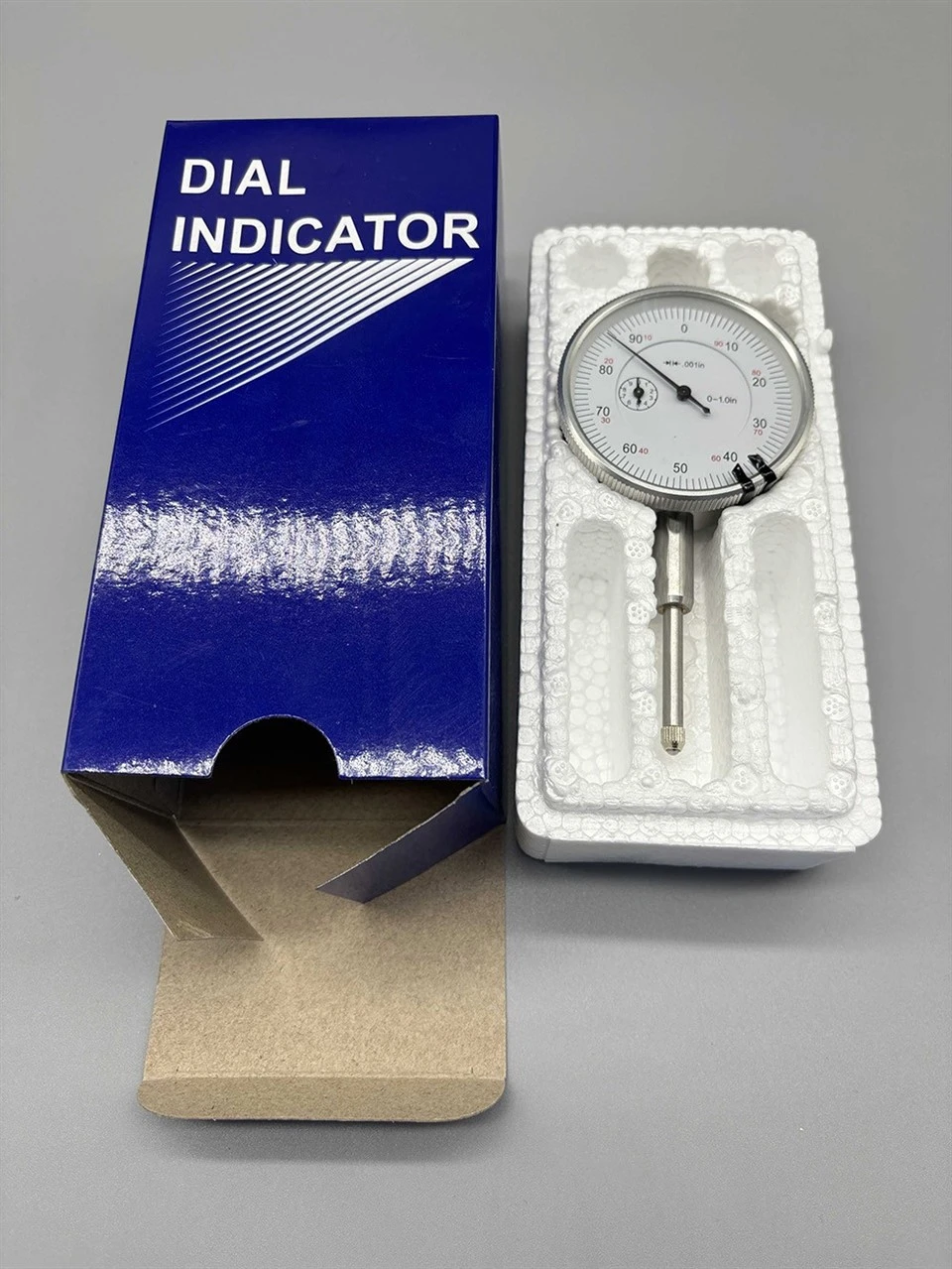
Applications of Digital Dial Indicators with Different Signal Outputs
The different signal output types of digital dial indicators make them suitable for a variety of applications.
Manufacturing
In manufacturing processes, digital dial indicators are used to measure the dimensions of workpieces during machining operations. For example, in a CNC machining center, a digital dial indicator with a digital output can be connected to the machine's control system. The measurement data can be used to adjust the machining parameters in real - time, ensuring high - precision machining. If the application requires integration with an older control system, an analog output digital dial indicator may be a better choice.
Quality Control
Quality control inspectors use digital dial indicators to check the tolerances of finished products. A digital dial indicator with a serial communication output can transfer the measurement data directly to a quality control software. The software can then perform statistical analysis on the data to determine if the products meet the specified quality standards.
Research and Development
In research and development, digital dial indicators with different signal output types are used to measure small displacements in various experiments. For example, in a materials science experiment, a digital dial indicator can be used to measure the deformation of a material under stress. The choice of signal output type depends on the data acquisition and analysis requirements of the experiment.
Our Product Range
As a dial indicators supplier, we offer a wide range of digital dial indicators with different signal output types to meet your specific needs. Our Lever Dial Test Indicator is a high - precision instrument that can be equipped with either analog or digital output options. It is ideal for applications where space is limited and high - accuracy measurement is required.
Our Digital Indicator Gauge provides a clear digital display and offers multiple digital output protocols, including USB and RS - 485. This makes it easy to integrate with your existing data acquisition systems and software for efficient data collection and analysis.
For those who prefer imperial units, our Imperial Dial Indicator is a great choice. It offers accurate measurement in imperial units and can be configured with the signal output type that best suits your application.
Contact Us for Procurement
If you are in the market for high - quality digital dial indicators, we are here to help. Our team of experts can provide you with detailed information about our products, including their signal output types, features, and applications. We can also assist you in choosing the right digital dial indicator for your specific measurement needs. Whether you are a small - scale manufacturer or a large - scale industrial enterprise, we have the products and solutions to meet your requirements. Contact us today to start a procurement discussion and take your measurement accuracy to the next level.
References
- "Precision Measurement Handbook", John Wiley & Sons
- "Industrial Metrology: Principles and Applications", CRC Press
- Manufacturer's documentation of digital dial indicators